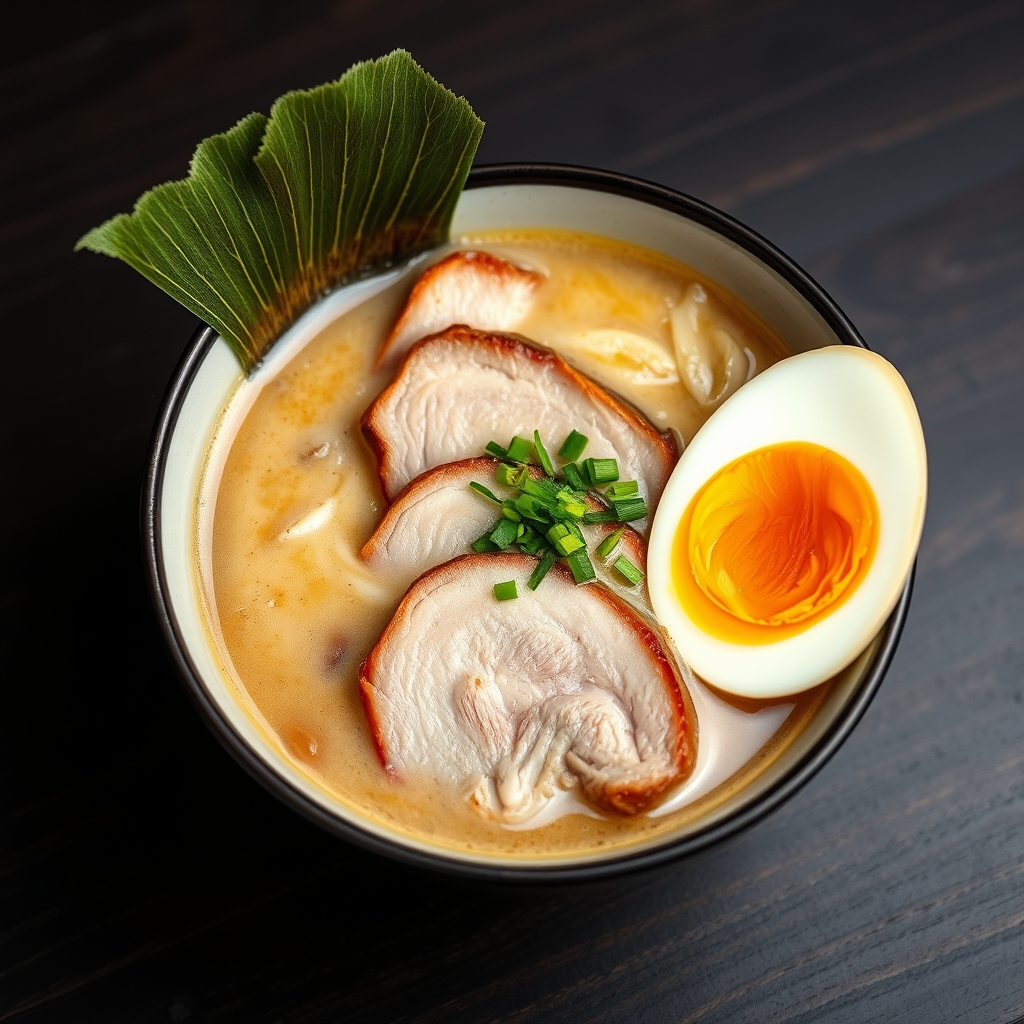
Tonkotsu broth looks creamy and tastes of roast pork, but it contains no milk and no cream. The opacity comes from collagen and fat that have been boiled so hard and so long that they stay suspended in the water. It is one of the few soups in the world where the technique is more impressive than the ingredient list.
Why the broth turns white
Bones from the femur and trotters go into a rolling boil — not a simmer — for twelve to eighteen hours. The aggressive heat breaks the bones down and emulsifies the fat into the water. Skim it too carefully and you lose the body; boil it too gently and the broth stays thin and grey.
The result is heavy. A proper tonkotsu broth coats the lips and has a faint sweetness from the rendered fat. Shops balance it with tare, a concentrated seasoning of soy, salt or miso that goes into the bowl before the broth.
What makes a good bowl
- The noodles are thin and straight. Hakata-style noodles are low in water so they stay firm, and they are ordered by hardness — "barikata" is the usual starting point.
- Kaedama exists for a reason. A second portion of noodles costs a couple of hundred yen because the first one goes soft while you eat it.
- Chashu is braised, not roasted. Rolled pork belly, cooked in soy and mirin, sliced thin and warmed in the broth.
- The egg is marinated. Ajitama sits in a soy-based cure for hours; a hard-boiled egg is a different, lesser thing.
Where to eat it
Fukuoka is the capital. The yatai — street stalls along the river — serve small bowls late into the night, and the local style is a lighter, saltier broth than the Tokyo version. Kurume, an hour south, is where the style began, and the shops there are smaller and often better.
In Tokyo, tonkotsu is usually heavier and thicker, often mixed with a fish-based broth. Chains such as Ichiran are consistent and easy, but the best bowls come from shops with ten seats and a queue of locals at 11 a.m.
A tonkotsu bowl is judged in the first thirty seconds: the aroma should be roast pork rather than boiled bone, the surface should be glossy rather than greasy, and the noodles should still have a bite.
How to order it
Use the ticket machine, choose the basic bowl first, and add a kaedama ticket if you are hungry. Specify noodle hardness when you hand over the ticket. Do not add too much of the condiments on the table — pickled ginger and sesame are there to reset the palate, not to flavour the soup.
Slurping is correct and practical: it cools the noodles and aerates the broth. Finish the noodles but not necessarily the soup; many regulars leave the last third, which is also a polite signal that the broth was rich enough.
Is it worth planning a trip around?
For Fukuoka, arguably yes. The city has a density of tonkotsu shops that no other place matches, and the yatai culture makes eating a bowl at midnight part of the trip rather than a detour. Outside Japan, the best bowls are in cities with a Japanese community and a chef willing to boil bones overnight.
Source: Tonkotsu ramen on Wikipedia, and Japan National Tourism Organization.
A shop with four bowls is usually a shop that has perfected its broth. A menu with twenty toppings is usually a shop buying broth in.
Use the TasteBridge finder to see local dishes, bakery, cafe plates, coffee and everyday drinks, with rough price bands and dietary filters.
Open Japan in the food finder