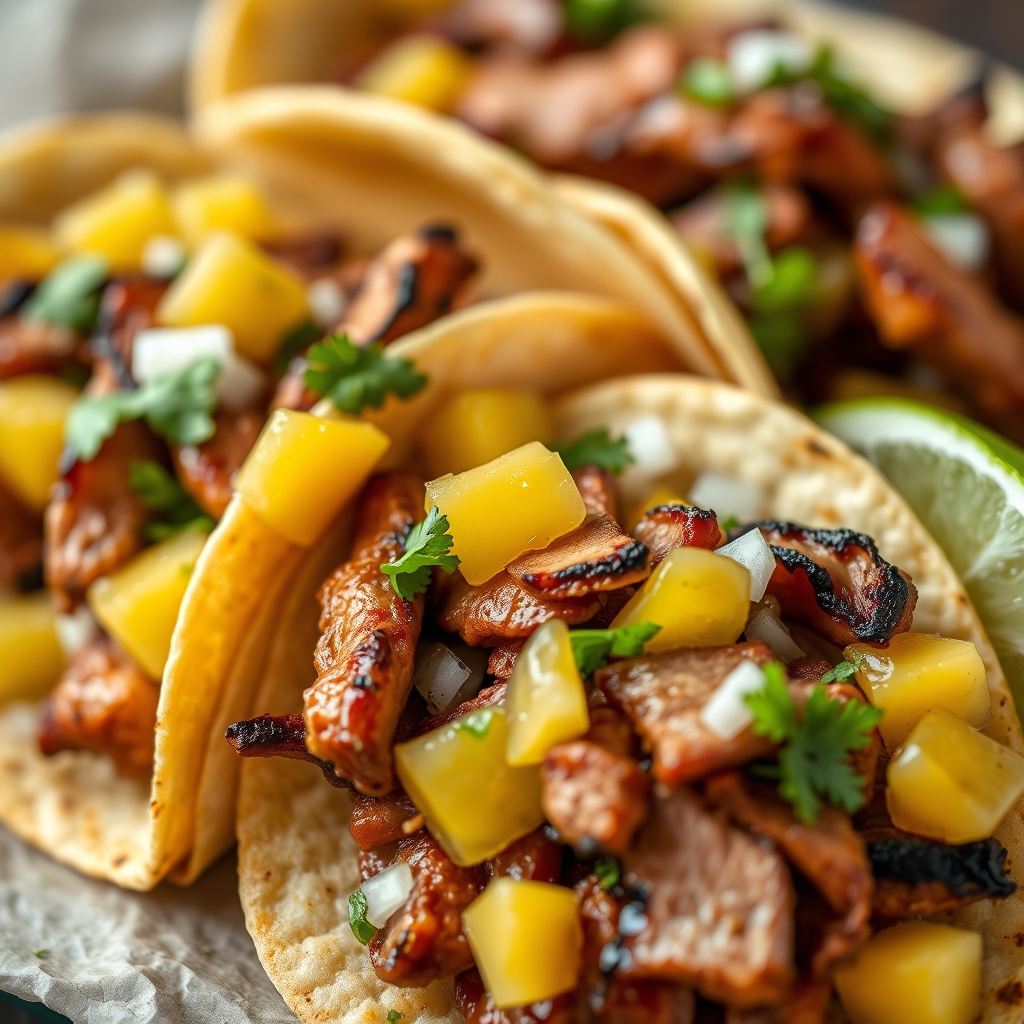
Walk past a taquería at ten at night and you will see it: a tapered stack of red-marinated pork turning slowly in front of a gas flame, with a pineapple fixed to the top. The cook shaves a thin sheet off the surface, catches it on a tortilla, and hands it over in under a minute. This is al pastor, and it is a direct descendant of the shawarma spit that Lebanese immigrants brought to Mexico in the early twentieth century.
From shawarma to trompo
Immigrant communities from the Ottoman Empire settled in Puebla and Mexico City, bringing the vertical spit and the practice of stacking marinated meat. Lamb was expensive and unfamiliar, so pork took over. The Middle Eastern spice mix was replaced by Mexican chillies and achiote, and the flatbread became a corn tortilla.
By the 1960s the dish had a name — al pastor, shepherd style — and a shape. The trompo, the tapered spit, is shorter and wider than a shawarma spit so the meat can be carved in one motion and the slices stay thin.
What makes it taste right
- The marinade is chilli-based. Guajillo and ancho chillies, achiote, vinegar, garlic and orange juice. The colour comes from the achiote, the bitterness from the chillies.
- The meat is thin. Slices of shoulder are stacked with the marinade between them, so each layer seasons the next.
- The fire is close. The outer layer crisps and caramelises; the inside stays pink and juicy.
- Pineapple does the acid. It is not a garnish. The juice cuts the fat and the charred fruit adds sweetness.
Where to eat it
Mexico City is the capital of the taco, and al pastor is its most visible form. El Huequito claims to have invented the modern taco al pastor in 1959; Orinoco and El Vilsito are the names locals argue about. In Puebla, El Turco is the reference point, and the version there is closer to the original fusion.
Look for a taquería with a crowd at the counter and a trompo that is actually turning. A spit that has been sitting still means the meat is being reheated, and the texture will be dry.
The best taco al pastor is not the one with the most meat. It is the one where the tortilla is doubled, the slice is thin, and the pineapple has been on the fire long enough to char at the edges.
How to order it
Say "con todo" for coriander, onion and pineapple, and expect salsa on the side rather than inside. A squeeze of lime is standard; a heavy pour of salsa verde will bury the marinade. Order two or three, not one — a single taco is a sample, not a meal.
If the menu lists "gringa", order it once: it is the same meat with cheese on a flour tortilla, and it is a different, heavier pleasure. Then go back to corn.
Is it worth planning a trip around?
For the price, yes. Few foods in the world deliver this much flavour per peso, and the taquería is a genuinely democratic institution: the same counter serves taxi drivers, office workers and tourists at midnight. Bring cash, expect a queue, and eat standing up.
Source: Tacos al pastor on Wikipedia, and Visit Mexico.
A good trompo has a dark, caramelised crust and a pineapple whose edges are blackened. If the meat looks uniformly pink and the pineapple is fresh, the spit has not been running long enough.
Use the TasteBridge finder to see local dishes, bakery, cafe plates, coffee and everyday drinks, with rough price bands and dietary filters.
Open Mexico in the food finder