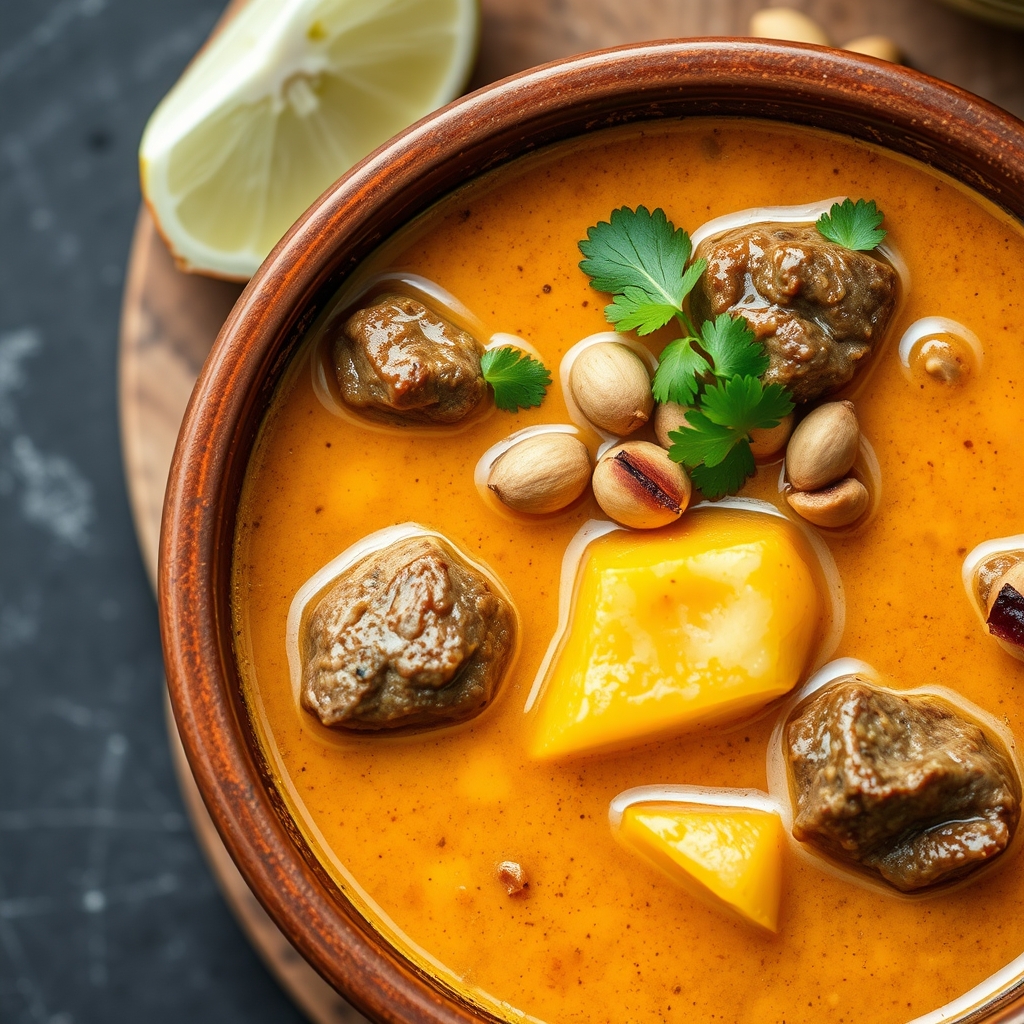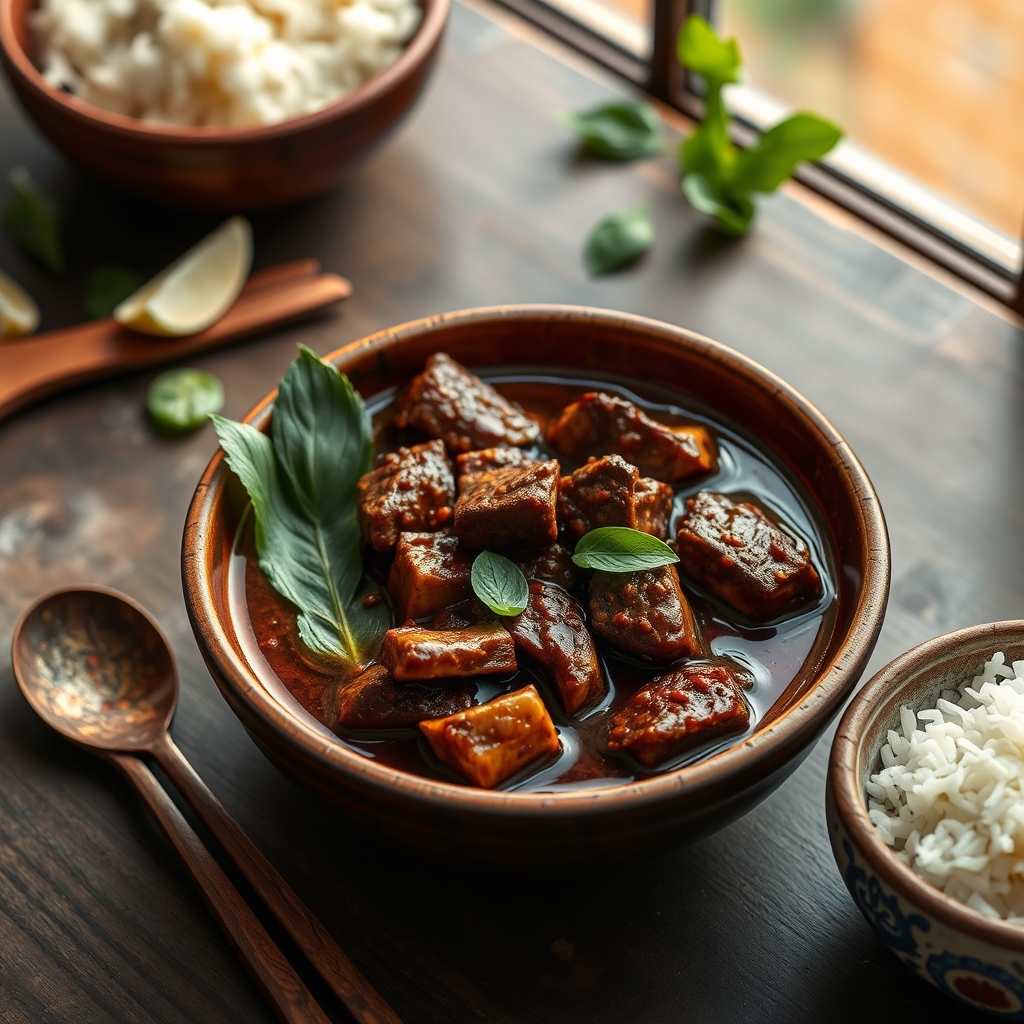
Most stews are finished when the meat is tender. Rendang is finished when the liquid is gone. In a good version the sauce has collapsed into a dark, almost dry coating that clings to each piece of beef, and the oil that separated from the coconut milk has toasted the spices rather than drowned them. It looks simple on the plate. It is one of the most patient dishes in Southeast Asia.
What rendang actually is
Rendang is a Minangkabau dish from West Sumatra, cooked for weddings, Eid, and the long table of a family gathering. The core ingredients are beef, coconut milk, and a paste of shallots, garlic, ginger, galangal, turmeric, chillies and lemongrass, with toasted grated coconut (kerisik) added near the end for body. Lime leaves and turmeric leaf go in whole and are fished out later.
The dish is often described as a curry in English, which sets the wrong expectation. A curry is served with sauce. Rendang is served when there is almost no sauce left — the meat is glazed rather than swimming, and the flavour is concentrated enough that a small spoonful is plenty with rice.
Why the cooking takes so long
- Coconut milk has to break. The milk is simmered until its water cooks off and the fat separates. Only then do the aromatics fry properly instead of stewing.
- The paste has to darken. Colour is a reliable guide: the rendang moves from pale gold to amber to near-black as the sugars in the shallots and coconut caramelise.
- The meat must stay intact. Slow heat keeps the fibres from shredding, so you get a slice you can cut with a spoon that still holds its shape.
- Toasted coconut thickens it. Kerisik absorbs remaining moisture and gives the finished dish a nutty, almost sandy texture that a starch thickener cannot copy.
Where to eat it
In Padang restaurants, rendang arrives as one of a dozen small plates, so you taste it alongside cassava leaf curry, fried chicken and sambal. In Padang itself, the dish is often drier and darker than the restaurant versions in Jakarta; in Malaysia, the rendang is wetter, sweeter, and frequently cooked with chicken for festive occasions.
Outside Southeast Asia, look for restaurants that also serve other Minang dishes. A kitchen that serves rendang alone is usually reheating a frozen base; a kitchen that serves rendang beside gulai and dendeng has a reason to keep a proper spice paste on hand.
The test of a rendang is not how hot it is. It is whether the spice paste has cooked long enough to taste round rather than raw — and whether the meat is still meat, not paste.
How to order and eat it
Ask for it with plain rice and something fresh on the side: cucumber, tomato sambal, or a handful of raw vegetables. The richness builds quickly, and the classic mistake is to order rendang with three other coconut-heavy dishes.
If you are cooking at home, use a cut with plenty of connective tissue — chuck, shin, brisket — and resist turning up the heat. The dish needs to move, not boil. A wide pan works better than a deep pot because more surface area means faster reduction and no steaming.
Is it worth planning a trip around?
Yes, but not for the reason the rankings suggest. Rendang is not delicious because it is dramatic; it is delicious because it is layered. You taste the toasted coconut, then the galangal, then the chilli, then the beef, in that order, and each one lasts a few seconds.
If you only have one meal in Sumatra, order rendang and ask for the sauce from the bottom of the tray, where the fried coconut and oil have settled. That is the part regulars want, and most first-time visitors never see it.
Source: Rendang on Wikipedia, and Indonesia Travel for regional food guides.
Push a piece of meat to the side of the plate. If a pool of pale coconut milk appears, the dish was pulled early. If the oil is dark and the paste clings, it was cooked properly.
Use the TasteBridge finder to see local dishes, bakery, cafe plates, coffee and everyday drinks, with rough price bands and dietary filters.
Open Indonesia in the food finder