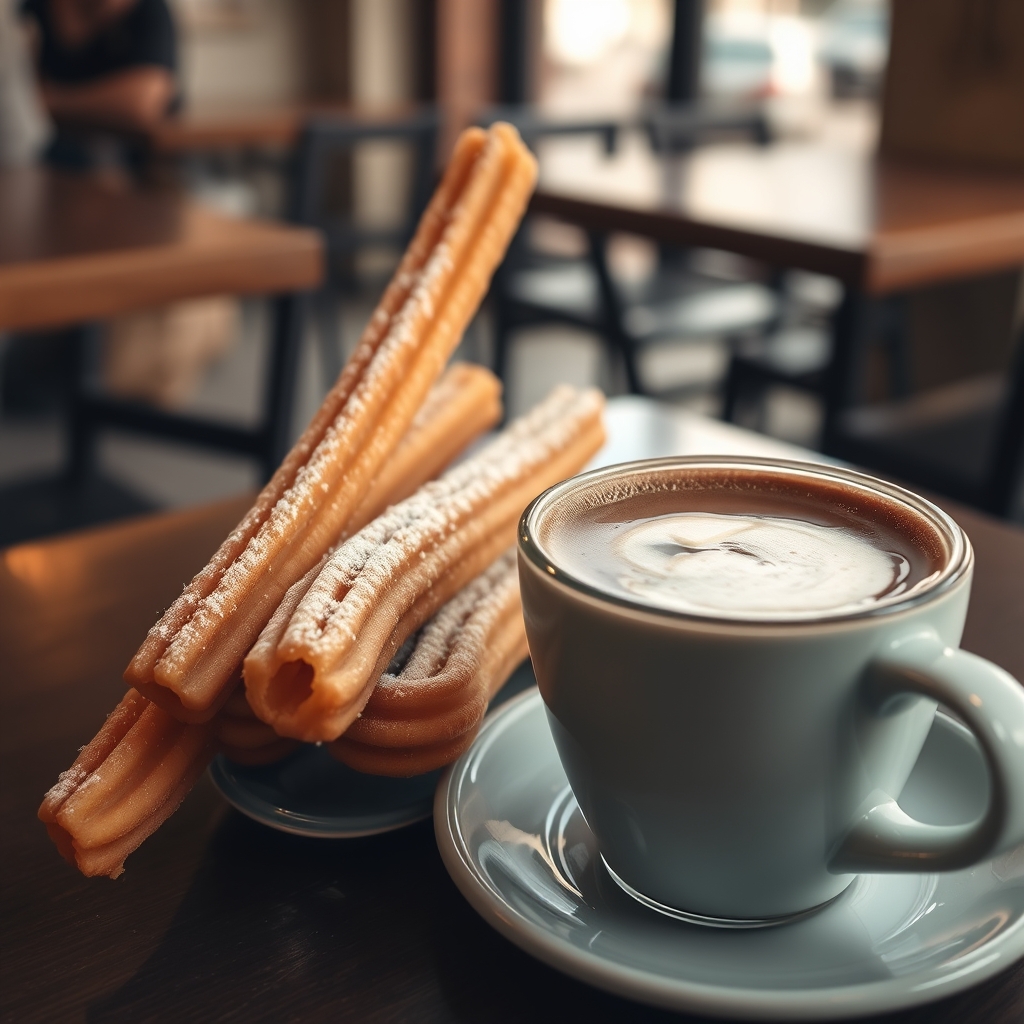
Churros are a dough, a nozzle and a fryer — nothing more. The dough is a simple choux-style mix of flour, water and salt, piped through a star-shaped tip into hot oil, fried until it is crisp and hollow, and eaten immediately. In Spain it is breakfast, often at seven in the morning, often standing at a counter.
What makes them different from a doughnut
A doughnut is a sweetened, enriched dough, usually fried in a round shape and glazed. Churros are unsweetened, unleavened and piped. The ridges from the star nozzle are functional: they add surface area for crunch and give the dough room to expand without collapsing.
The result is a pastry that is crisp on the outside, almost hollow in the middle, and barely sweet. That is deliberate, because the sweetness comes from what you dip them in.
The chocolate is the point
- It is thick, not drinkable. Spanish chocolate a la taza is thickened with cornflour until it coats the churro rather than running off it.
- It is bitter. Dark cocoa and very little sugar, so it cuts through the fried dough instead of adding to it.
- It is served hot. Lukewarm chocolate sets and turns gluey; the cup should arrive steaming.
- Cinnamon sugar is optional. It is standard in Mexico and in export markets, and rare in a Madrid churrería.
Churros vs porras
Order at a counter in Madrid and you will see two shapes. Churros are thin and ridged; porras are thicker, straighter and chewier, made from the same dough with a different nozzle. Both are sold by weight, and both are eaten with chocolate or coffee. Porras are the better choice if you want something with more bite; churros are the classic for dipping.
A good churro makes almost no sound when you bite it and then cracks. A bad one is either soft all the way through or so hard it shatters — both mean the oil was at the wrong temperature.
Where to eat them
Chocolatería San Ginés in Madrid has been serving churros and thick chocolate since 1894 and stays open through the night, which tells you what it is for. Valencia and Andalusia have their own churrerías, often simpler and cheaper, where the churros are fried to order rather than held under a lamp.
Outside Spain, look for a shop that fries to order and offers chocolate rather than only sugar. A churro that has been sitting for twenty minutes is a different food, and no amount of cinnamon sugar fixes it.
Is it worth planning a trip around?
Not a trip, but it is a good reason to get up early in Madrid. The combination of a city waking up and a paper cone of hot churros is one of the cheapest and best breakfast experiences in Europe, and it costs less than a hotel coffee.
Source: Churro on Wikipedia, and Spain.info for regional food guides.
Ask for "churros con chocolate" and a glass of water. Eat them at the counter, not from a bag, and dip rather than pour.
Use the TasteBridge finder to see local dishes, bakery, cafe plates, coffee and everyday drinks, with rough price bands and dietary filters.
Open Spain in the food finder