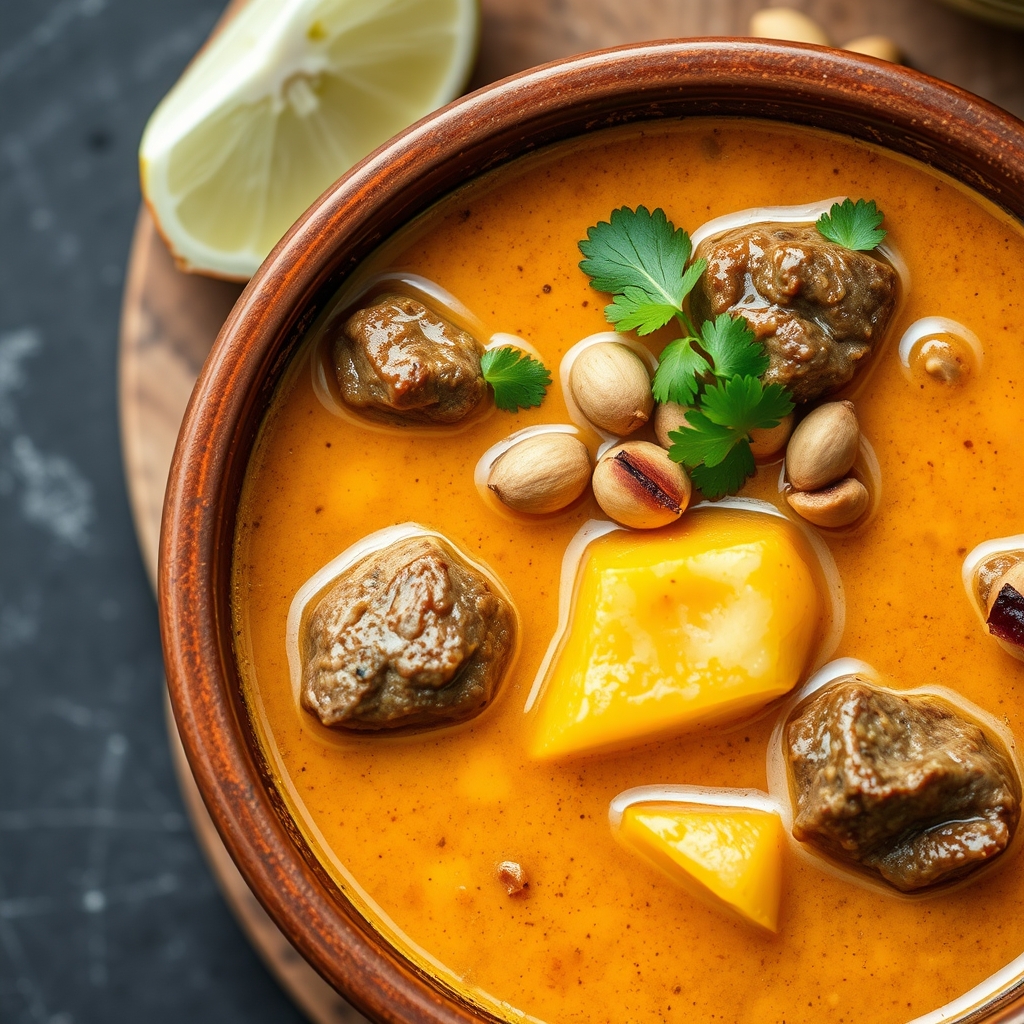
Order massaman in Thailand and you may be asked whether you want it mild. That question is unusual in a country where the default chilli level is not a polite negotiation. Massaman is a curry that does not want to hurt you. It wants to taste of cinnamon and coconut and slow-cooked beef, and it takes about three hours to get there.
Where the recipe came from
The name is usually traced to "Mussulman", an old term for Muslim, and the dish sits in the same family as Persian and Indian braises. Traders from the Persian and Indian world brought cardamom, cinnamon, cloves, cumin and nutmeg to Ayutthaya and the southern ports; Thai kitchens kept the spices but changed the liquid to coconut milk and the seasoning to fish sauce and palm sugar.
This is why massaman tastes familiar to anyone who has eaten a Persian ghormeh or an Indian rogan josh, and completely foreign to anyone who expects lemongrass and lime. It is a Thai dish with an immigrant skeleton.
What is actually in the paste
- Dry spices: cardamom, cinnamon, cloves, star anise, cumin, coriander seed — toasted and ground.
- Fresh aromatics: shallots, garlic, galangal, lemongrass and dried red chillies, pounded with the dry spices.
- Sweet and sour: palm sugar and tamarind, balanced at the end rather than at the start.
- Body: thick coconut milk, plus roasted peanuts for texture and a little fish sauce for depth.
Why it takes three hours
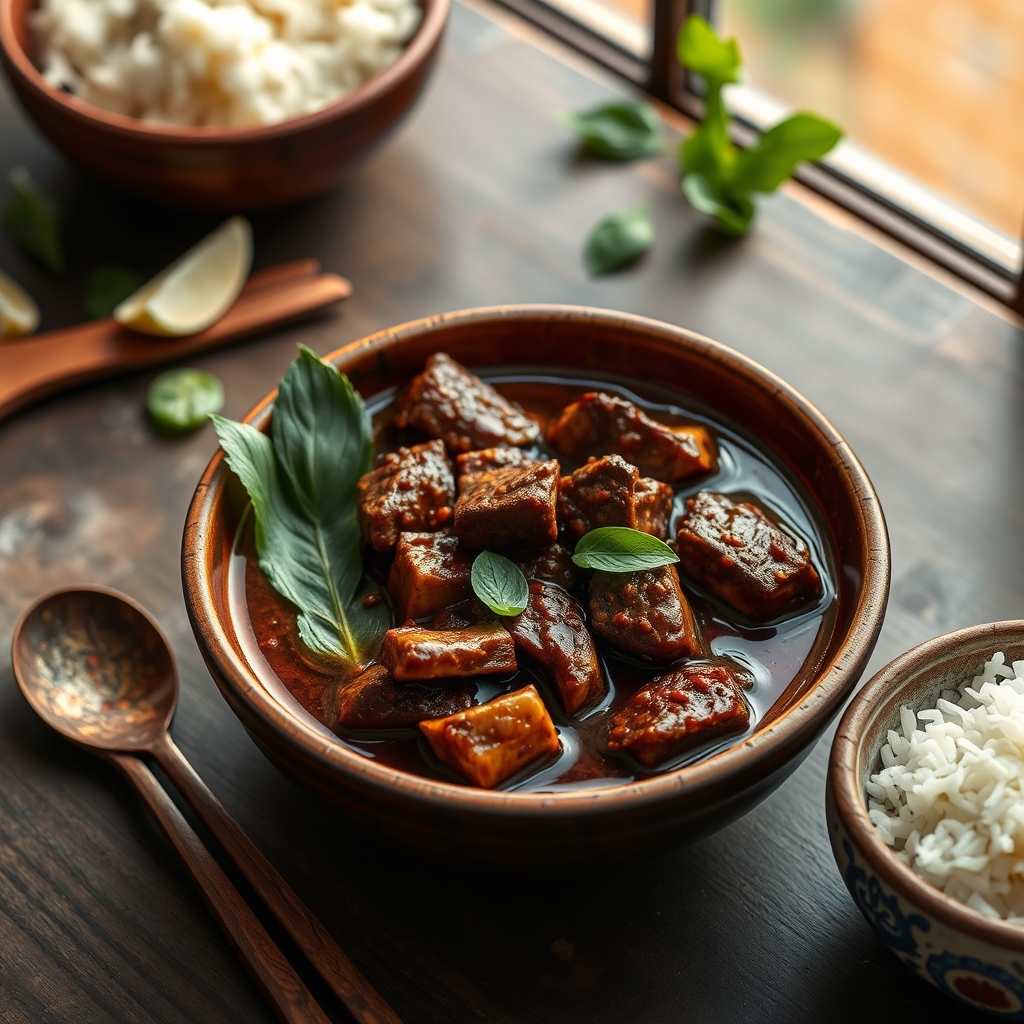
Massaman is a braise. Beef shin or chuck goes in with the paste and thick coconut milk, and then it simmers until the collagen gives up. Potatoes go in later so they do not dissolve; peanuts go in last so they keep their bite. The sauce reduces until it coats the meat rather than pooling around it.
Chicken versions are faster and common, but the beef version is the one that shows whether a kitchen understands the dish. If the beef is tough and the sauce is thin, the pot was rushed.
Where to eat it
Bangkok's old commercial district around Charoen Krung has Muslim Thai restaurants that have served massaman for generations, often alongside roti and biryani. In the south, Hat Yai and Pattani versions tend to be spicier and use more cardamom. Chiang Mai's tourist-facing restaurants often sweeten it heavily; ask for "mai wan" (not sweet) if that is not what you want.
Outside Thailand, look for a menu that lists massaman next to roti canai or biryani. That pairing is a good sign the kitchen is cooking the dish as part of a tradition rather than as a single item for foreigners.
Massaman is the Thai curry you can serve to someone who says they do not like Thai food. It is also the one that most often disappoints, because a sweet, thin version is much cheaper to make than a proper three-hour braise.
How to order it
Ask for roti on the side if it is available — the flaky bread is a better match than jasmine rice for the first few bites. Order a sharp salad or a sour soup alongside, because massaman is rich rather than hot, and the contrast matters more than the chilli level.
In a restaurant at home, ask whether the paste is made in house. A kitchen that pounds its own paste will usually tell you, and the difference is bigger here than in any other Thai curry, because the dry spices go stale quickly.
Is it worth planning a trip around?
Not on its own, but it is the best argument for eating outside the tourist menu in Thailand. Massaman rewards a kitchen that is cooking for a community with a long memory of the dish — and that is exactly the kind of kitchen most visitors never find.
Source: Massaman curry on Wikipedia, and Tourism Authority of Thailand.
Palm sugar should sit under the spice, not on top of it. If the first thing you taste is sugar, the kitchen used too much and probably reduced the sauce too little.
Use the TasteBridge finder to see local dishes, bakery, cafe plates, coffee and everyday drinks, with rough price bands and dietary filters.
Open Thailand in the food finder