Most roast birds are judged on the meat. Peking duck is judged on the skin, and the skin is prepared with a fussiness that borders on engineering: air pumped between skin and flesh, boiling water poured over the bird, a maltose glaze, then a night hanging in a cold, dry room. By the time it reaches the oven, half the work is already done.
The two days before dinner
The classic method starts with inflating the duck. Air separates the skin from the meat so the layer of fat underneath can render without the skin sticking. Then boiling water is poured over the bird to tighten the skin, and a glaze of maltose and vinegar is brushed on. It hangs to dry for at least twelve hours, often longer.
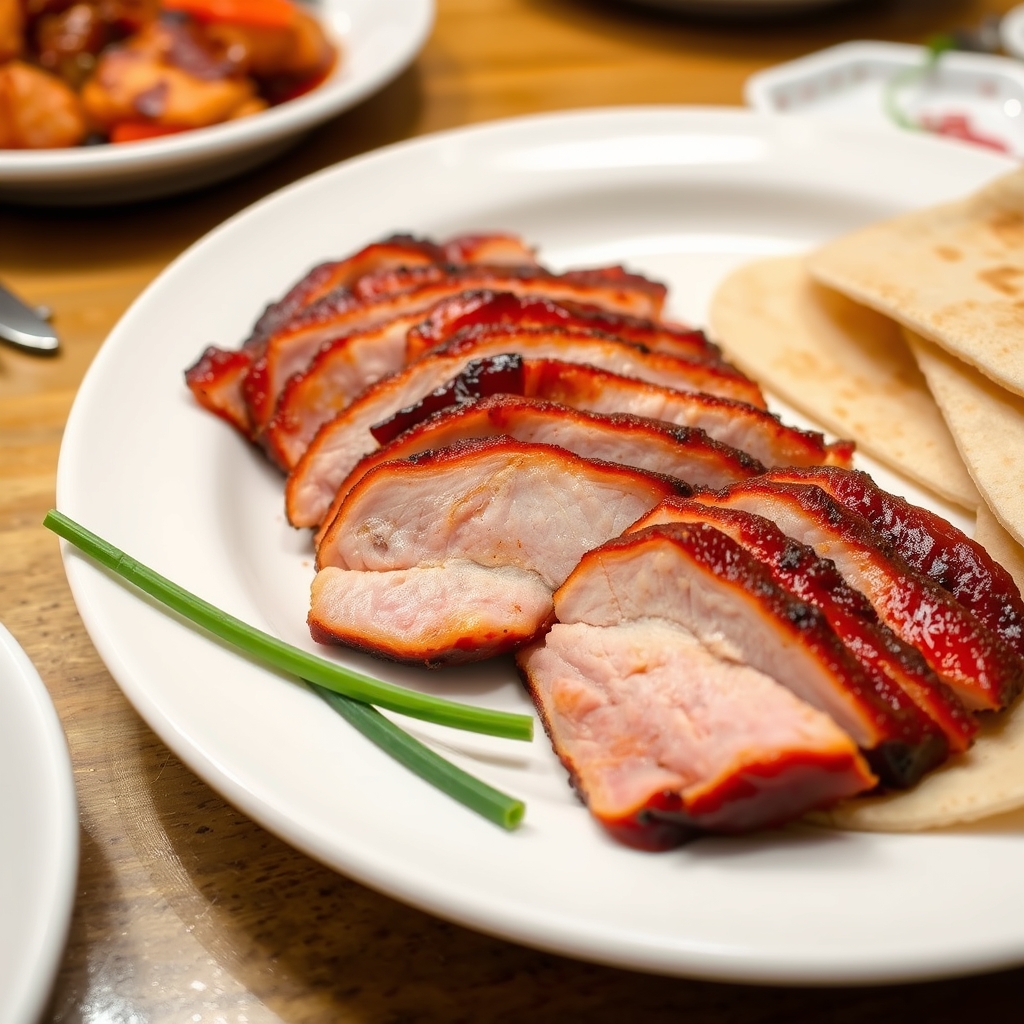
Roasting happens in a fruitwood-fired oven, hung by the neck so the fat drains away from the cavity. The result is a bird with skin the colour of dark amber that cracks when carved and meat that is still moist but clearly secondary.
Why the skin shatters
- Dry skin crisps, wet skin steams. The overnight drying step is the whole trick, and it is the step home cooks skip.
- Sugar browns fast. The maltose glaze caramelises at a lower temperature than the meat cooks, giving colour without drying the bird out.
- Fat is the insulator. Rendering the layer under the skin keeps the breast moist while the surface gets hot enough to blister.
- Carving is timed. A skilled carver takes the skin first, in thin slices, and serves it before the meat so it is eaten at its crispest.
How it is served
The duck arrives in three parts. First the skin, sometimes dipped in sugar and eaten alone. Then the meat, carved into slices, wrapped in a thin pancake with spring onion, cucumber and hoisin or a sweet bean sauce. Finally the carcass, which is often taken back to the kitchen and made into a soup or a stir-fry — ask, because it is usually free and most tourists leave it on the table.
In Beijing, the pancakes are thin and slightly translucent. In Cantonese versions the wrappers are thicker and the sauce is sweeter. Both are good, and they are not the same dish.
The first slice of skin is the only bite in the meal that cannot be replicated anywhere else. Everything after it is excellent roast duck — but it is roast duck.
Where to eat it
Quanjude is the historic name, with branches across Beijing and a menu that has not changed much in decades. Da Dong is the modern reference point, with a leaner bird and a dining room built for it. Siji Minfu is the value option near the Forbidden City, and the queue is long for a reason.
Book ahead for dinner. Many restaurants take reservations a day or two out, and walk-ins at the famous places wait an hour or more. Lunch is easier and the duck is just as good.
Is it worth planning a trip around?
If you are in Beijing, it is the one expensive meal that justifies itself. If you are not, it is worth ordering at a specialist restaurant rather than a general Chinese menu — the drying and glazing stages are what make the dish, and a kitchen that serves forty other things is not set up for them.
Source: Peking duck on Wikipedia, and Visit Beijing.
The carcass is usually turned into soup or a minced stir-fry at no extra cost. If nobody offers, ask before the duck is carved.
Use the TasteBridge finder to see local dishes, bakery, cafe plates, coffee and everyday drinks, with rough price bands and dietary filters.
Open China in the food finder