A croissant contains four ingredients and about eighteen hours of waiting. Flour, water, salt, yeast — then butter, folded in three times, with a rest in the fridge between each fold. Get the butter too warm and it merges with the dough; too cold and it cracks. The window is narrow, and that is why good ones cost more than bad ones.
The layering maths
Each "turn" folds the dough into thirds, tripling the number of butter layers. Three turns gives twenty-seven layers; a fourth gives eighty-one. Most professional croissants sit between twenty-seven and fifty-five, because beyond that the layers become too thin to separate cleanly and the pastry turns bready.
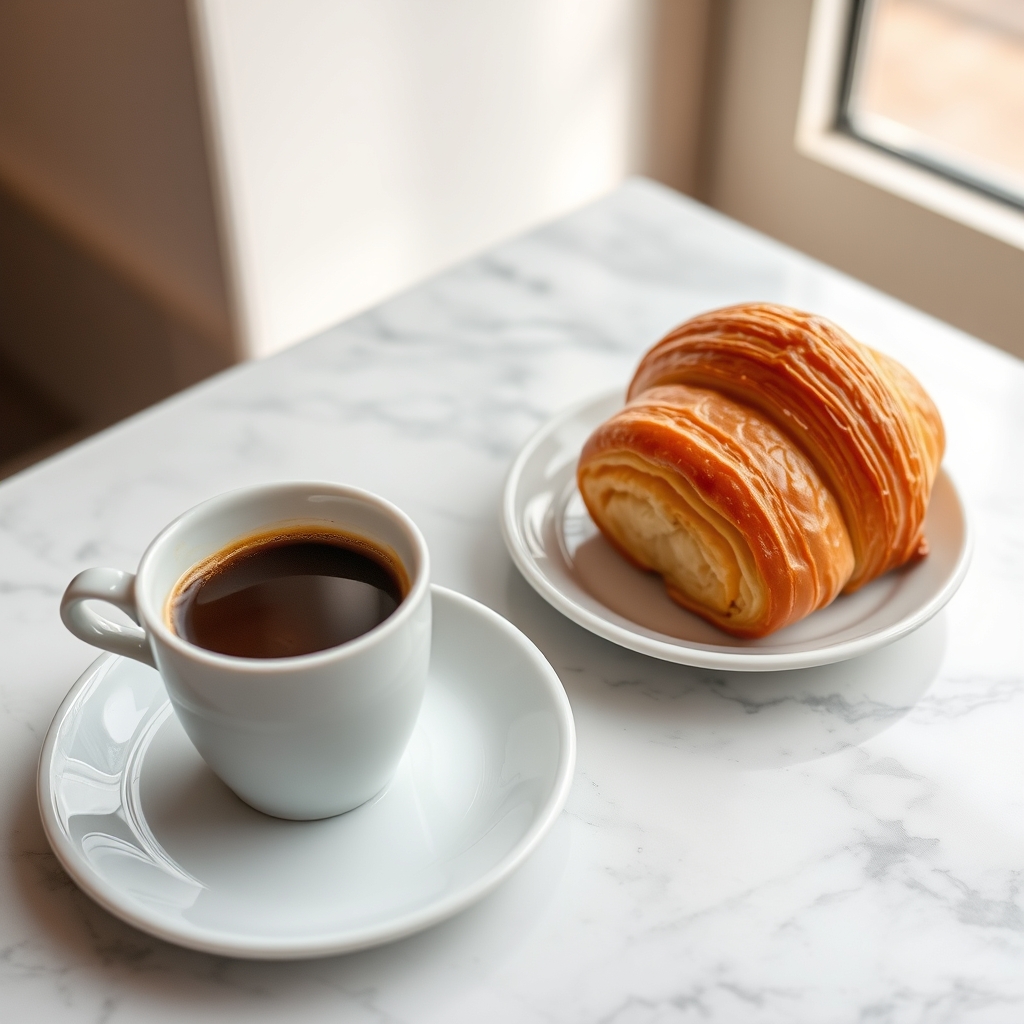
The honeycomb interior is the evidence. When the pastry hits a hot oven, the water in the butter and dough turns to steam, and the steam has nowhere to go but between the layers. The result is a structure that is crisp outside and almost hollow inside.
What separates a real one from a shaped roll
- Butter, not margarine. In France, "croissant au beurre" is legally distinct from an ordinary croissant, which may use vegetable fat.
- Cold chain discipline. The dough must stay below about 18°C during shaping. Warm butter smears instead of layering.
- Overnight proof. A slow final rise at low temperature develops flavour that a fast warm proof cannot.
- A proper bake. Deep amber, not pale gold. An underbaked croissant collapses within minutes of leaving the oven.
Why it is cheap in France and expensive everywhere else
In France the croissant is a daily habit, so bakeries make them in volume and sell them at a price that reflects flour and butter rather than image. Abroad, the same pastry is a luxury item with imported butter, a pastry chef's labour and rent attached. The gap is wider than for almost any other food on this list.
There is also a quality gap. A supermarket croissant made with laminated margarine can look convincing in a photograph and taste of nothing but sugar and fat. The giveaway is the crumb: real butter pastry tears in long flakes, while a margarine version breaks into crumbs.
Judge a croissant by sound before taste. It should crackle when you press it and leave a small pile of flakes on the plate. If it stays silent, the lamination failed.
How to order it
Ask for "un croissant au beurre" and a coffee. In Paris, that means an espresso or a noisette rather than a latte; the pastry is rich enough without milk. Eat it within an hour of baking — a croissant is at its best about fifteen minutes out of the oven and declines quickly.
If you want the baker's own favourite, order a "pain au chocolat" or a "kouign-amann" as well and compare the lamination. The same technique runs through all three, and a bakery that nails one usually nails the others.
Is it worth planning a trip around?
Not a trip on its own, but it is a good reason to walk to a bakery instead of a hotel buffet. In Paris, the difference between an average croissant and an excellent one is about one euro and two streets, and the excellent one will change how you think about breakfast.
Source: Croissant on Wikipedia, and France.fr for regional food guides.
Put the croissant on a plate and press it gently. Flakes should fall. Then cut it open: the inside should look like a honeycomb with visible layers, not like bread.
Use the TasteBridge finder to see local dishes, bakery, cafe plates, coffee and everyday drinks, with rough price bands and dietary filters.
Open France in the food finder